


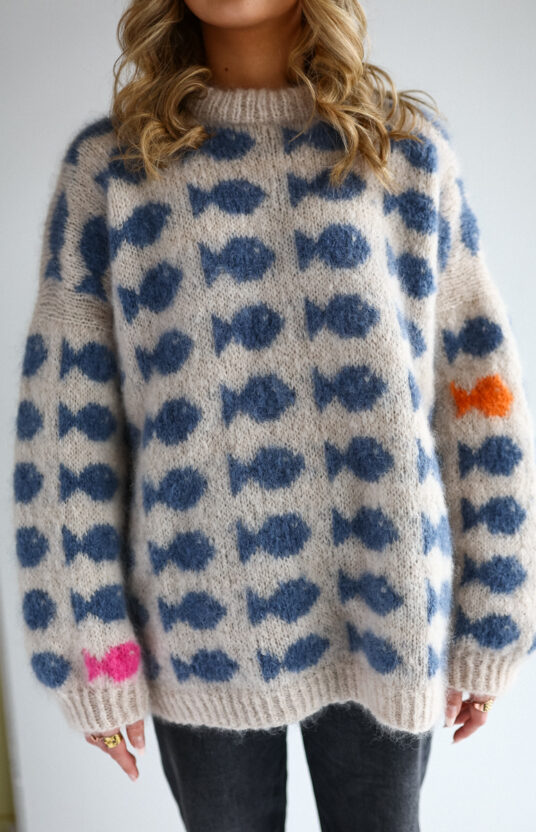

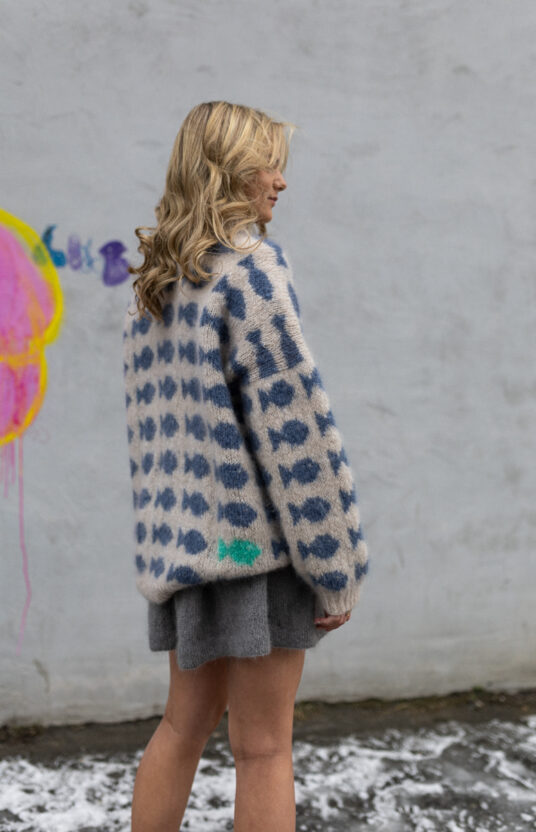


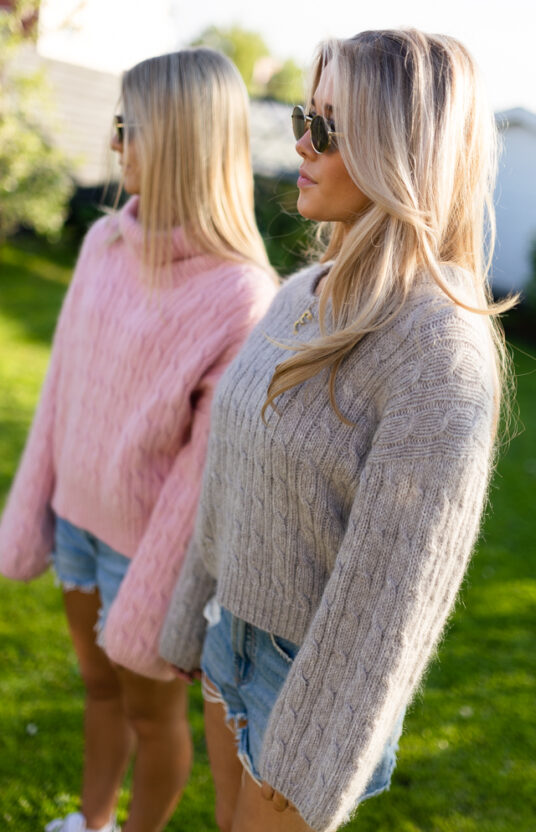


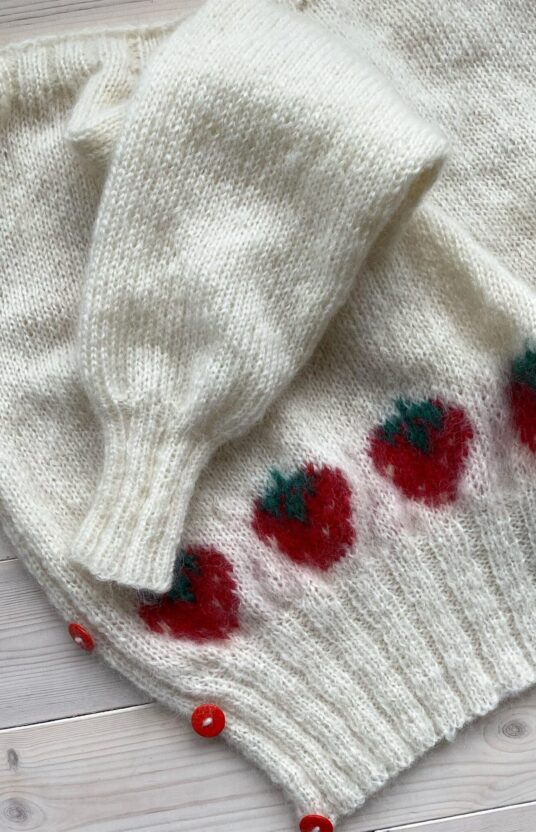


Knitwear is best when it rests flat in the closet – avoid hangers, so you don't lose their shape. Fold them neatly and store them preferably in a drawer or box. If they are packed away for a long time, it may be wise to protect them from moths, for example with lavender sachets or cedar wood.
Air out the knitted garment every now and then – it will stay fresh without needing to be washed. Feel free to alternate between the garments you use, so they last longer. A little care will keep your favorite sweater looking great year after year!
Pilling occurs when the fibers in the yarn rub against each other or against other surfaces, for example, when you wear a jacket over a sweater or carry a bag over your shoulder. It is completely natural – especially in exposed areas like on the sleeves, sides, and under the arms.
Even high-quality yarn can pill. It depends on how the fibers are spun and what type of fiber it is. Soft wool yarns like Hip Wool are loosely spun and are extra comfortable to wear (even though it’s a thick yarn made of 100% wool), but they can also be a little more prone to pilling.
Remove pills in 1-2-3
Pilling is completely normal on knitted garments, especially at the beginning. Pilling is loose fiber and can occur more often on loosely knitted garments and soft yarns. Yarns knitted together, for example POP merino and Hip Mohair, or Hip Wool and Hip Mohair, bind the fibers and pill less.
Pilling / lint is easy to remove! Many good and fast tools have been developed for removing pills, and it's a good idea to address it right away before it becomes too much and possibly mats.
-
Lay the garment flat.
-
Use a lint brush / comb or fabric shaver and gently run it over the area.
-
Brush lightly over it at the end – and your garment will be like new again!
A little care now and then will help your favorite garment stay looking good for a long time.
Various ways to remove lint / loose fibers
For wool and delicate garments, a lint comb or a good electric lint remover with a fine mesh screen is best. Avoid razors and coarse sponges on thin knits – they can easily damage the fibers.
An electric lint remover is not suitable for mohair knits, as it will remove the natural fluff of the mohair yarn and give the knit a smoother surface. Always test on a less visible area if you are unsure.
-
Cashmere
-
Electric fuzz remover (fabric shaver)
-
Disposable razor (manual disposable razor)
-
Lint roller (clothing roller with adhesive)
-
Brush (with natural or synthetic bristles)
-
Sponge with rough side (e.g., kitchen scrubber)
-
Fleece/fluffing fungus (specially made for textiles)
-
Scissors (for careful trimming of larger knots)
HIP WOOL OG POP MERINO
Hip Wool is an incredibly soft yarn made from 100 % wool. It is loosely twisted to give it this soft feel. The more a wool yarn is twisted at the fiber level, the «stiffer» the yarn can feel. Now, pure wool that is loosely twisted tends to shed more (= releases loose fibers).
The advantage of this yarn is that it’s incredibly soft and doesn’t itch, compared to yarns that are more tightly twisted (= stiffer, more «prickly»). The advantage of the latter is that it sheds less. Of course, this is a matter of personal preference—what you want and what matters most to you is what counts. Here at HipKnitShop, we prefer soft and cozy wool in 100 % (in addition to the other types of yarn we carry).
It will be absolutely fine with a few bumps though 🙂
With Hip Wool, you'll need to help remove loose fibers («lint balls») a few times, but then it stops. This should be done before too long passes, otherwise it will felt. Take a sweater in front of the TV and pick them off, or alternatively use an electric lint remover for smaller pills (I use that with good effect).
Then you might have to repeat yourself. Otherwise, it's unfortunately true that some people «pinch» more than others.
After some time, bump removal keeps it looking nice.
The same applies to our Pop Merino.
If you want wool that doesn't pill, choose yarn that is more twisted/has more plies, blended with synthetic fibers, or superwash. You can also knit with an extra strand of thin mohair, which also helps bind the fibers.
